

Forex
+100 Assets
Content table
6 mounts ago
3 Minutes read
Written by Greenup24
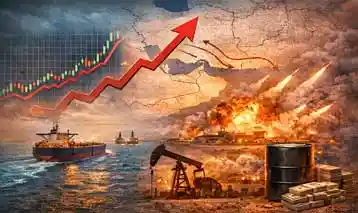
WTI crude oil futures surged more than 6% on Monday, climbing above $71 per barrel — the highest level in over eight months. The rally followed unprecedented joint US and Israeli strikes on Iran, sharply escalating geopolitical tensions across the Middle East. At one point, prices were up nearly 10% intraday, highlighting how sensitive the oil market is to regional risk.
The market’s primary focus is the Strait of Hormuz, a strategic waterway responsible for transporting roughly one-fifth of global oil shipments, along with substantial volumes of natural gas. Even a temporary disruption in this corridor could trigger a major supply shock.
Although Tehran maintains that the strait remains open, several global shipping companies have already started rerouting vessels away from the narrow passage. This reaction alone signals that operational risks are being taken seriously — even without an official closure.
Beyond concerns about supply routes, reports indicate retaliatory missile strikes by Iran targeting US bases across neighboring countries, including the UAE, Bahrain, Kuwait, Qatar, Saudi Arabia, Jordan, Iraq, and Syria. This development increases the probability of a wider regional escalation — a scenario that typically adds a geopolitical risk premium to oil prices.
In such an environment, traders tend to react more to headlines than to short-term supply and demand fundamentals. As a result, volatility can intensify rapidly and unpredictably.
On the supply side, OPEC+ announced it would raise production by 206,000 barrels per day in April, ending a three-month pause. However, this increase remains significantly below the previously discussed range of 411,000 to 548,000 barrels per day.
The market is currently balancing two opposing forces: increased output on one side, and the risk of supply disruption in one of the world’s most critical energy corridors on the other. For now, geopolitical risk appears to be the dominant price driver.
At present, oil prices are being supported more by the threat of disruption than by confirmed supply losses. If the Strait of Hormuz remains open and tensions stabilize, some of the recent gains could retrace. However, even minor signs of serious disruption could push the market into a stronger, headline-driven rally.
In periods like this, effective risk management becomes more important than predicting price direction. Oil markets have repeatedly shown their ability to shift dramatically within hours when geopolitical shocks occur — making crude oil both highly attractive and inherently high-risk for traders.


