

Forex
+100 Assets
Content table
1 month ago
5 Minutes read
Written by Greenup24
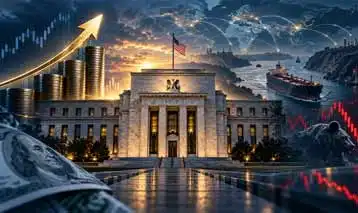
The possibility of a Federal Reserve interest rate hike in September has become one of the most important issues facing global financial markets. Persistent inflation, higher energy risks and geopolitical uncertainty are forcing investors to reconsider the outlook for US monetary policy.
Recent comments from Federal Reserve Chair Kevin Warsh reinforced these concerns. Warsh said inflation was not yet declining sustainably and emphasized that more work may be required to return underlying inflation to the Fed’s 2% target.
Following his remarks, market expectations for a September rate hike increased sharply, placing pressure on major US stock indices.
One of the main reasons is the latest US inflation data. The Personal Consumption Expenditures Price Index, the Fed’s preferred inflation measure, increased by 0.2% in July, while the annual rate reached 3.7%.
Inflation therefore remains well above the Federal Reserve’s target. At the same time, the US economy continues to show resilience, while the labor market remains close to full employment.
This combination creates room for the Fed to maintain restrictive monetary policy or consider another rate increase without immediately creating serious recession concerns.
Geopolitical developments remain a major source of inflationary pressure. Renewed tensions between the United States and Iran, together with reduced vessel traffic through the Strait of Hormuz, could affect the supply and transportation of oil, natural gas and refined products.
Higher energy prices can spread through the broader economy by increasing transportation, manufacturing and agricultural costs. Europe could be particularly vulnerable to a renewed increase in gas prices.
Meanwhile, the Russia Ukraine conflict continues to disrupt shipping activity in the Black Sea, an important export route for wheat and other agricultural commodities. Prolonged disruption could add further pressure to global food prices.
Rising trade tensions between the United States, Canada and China are also complicating the inflation outlook. Tariffs increase the cost of imported goods, and businesses may eventually pass those additional costs on to consumers.
If energy, food and import costs rise simultaneously, the Federal Reserve may face stronger pressure to tighten monetary policy and prevent inflation from becoming entrenched.
The bond market has already responded to the changing interest-rate outlook. The US 10-year Treasury yield climbed toward 4.75%, reaching its highest level since January 2025.
Higher Treasury yields can support the US Dollar while creating short term pressure on non yielding assets such as Gold. They can also reduce the relative attractiveness of equities by increasing borrowing costs and raising the discount rate applied to future corporate earnings.
The S&P 500, Nasdaq and Dow Jones came under pressure as expectations for tighter monetary policy increased. Strong Nvidia earnings temporarily supported market sentiment, but investors quickly returned their attention to inflation and Federal Reserve policy.
No. The economic conditions may support a rate increase, but the outcome remains uncertain. Before the September meeting, Fed officials will assess inflation figures, employment data, wage growth, consumer spending and developments in energy markets.
Three main scenarios are currently possible:
Market implied probabilities can change quickly as new economic data becomes available.
The probability of a September Federal Reserve rate hike has increased. Inflation remains above target, the US economy is relatively strong, geopolitical risks are threatening energy and food supplies, and trade tensions could raise import costs.
However, the final decision will remain data dependent. Traders should monitor not only the interest-rate announcement but also the Fed’s statement and the Chair’s press conference. Even if rates remain unchanged, hawkish guidance could create significant volatility across the US Dollar, Gold, equity indices and bond markets.
Follow GreenUp24 for the latest economic analysis and insights into the developments shaping global financial markets.
This article is provided for educational and informational purposes only and does not constitute investment advice or a trading signal.


