

Forex
+100 Assets
Content table
3 months ago
5 Minutes read
Written by Greenup24
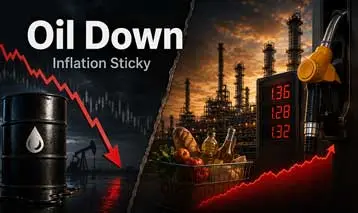
When crude oil prices fall, consumers usually expect gasoline, diesel, and transportation costs to follow. This time, however, the relationship is not working as quickly as many economic models might suggest.
Oil prices have declined, but drivers are still seeing relatively high prices at fuel stations. The reason is straightforward: consumers do not buy crude oil. They buy gasoline, diesel, heating oil, and other refined products.
At the moment, the main pressure is not coming from a shortage of crude oil itself. It is coming from tight supplies of the products made from it.
Lower crude prices normally reduce costs for consumers and businesses. That is why many inflation forecasts automatically assume that falling oil prices will eventually push transportation and consumer prices lower.
But anyone who has recently visited a fuel station knows that the expected relief has not fully arrived.
The widening gap between crude oil and fuel prices has even prompted criticism from US President Donald Trump, who has threatened action against oil companies. However, the issue is more complicated than corporate pricing decisions or profit margins.
A major part of the problem lies in the refining sector.
There may be enough crude oil in the market, but refiners have limited capacity or insufficient inventories to turn that crude into the fuels consumers actually need.
To understand the current situation, it is important to look at the refining crack spread.
The crack spread measures the difference between the price of crude oil and the value of the refined products produced from it. The term “cracking” refers to the process of breaking heavier hydrocarbon molecules into lighter products such as gasoline and diesel.
One of the most widely followed measures is the 3-2-1 crack spread. It assumes that a refinery purchases three barrels of crude oil and converts them into two barrels of gasoline and one barrel of distillate fuel, such as diesel or heating oil.
A rising crack spread generally signals that refined products are becoming more valuable relative to crude oil, often because supply is struggling to keep pace with demand.
According to the figures highlighted in the report, the crack spread has climbed to a record level of around $65.
In simple terms, a refinery could purchase a barrel of crude oil for approximately $71 and turn it into refined products worth about $136.
This unusually large margin suggests that the real shortage is occurring further down the supply chain, in refining and fuel production, rather than in the crude oil market itself.
One possible reason is that refiners remained cautious about building crude inventories during the war and the recent period of geopolitical uncertainty.
Some operators may have avoided holding additional stock because of concerns about supply disruptions, price volatility, or operational risks. Other facilities may have been unable to operate normally, particularly in areas affected by tensions around the Strait of Hormuz.
The Gulf region plays a significant role not only in crude oil exports but also in the production and distribution of refined petroleum products.
As a result, the global energy market is currently facing tighter supplies of gasoline, diesel, and other fuels, even though crude oil itself has become cheaper.
Persistently high diesel prices affect much more than the cost of filling a vehicle.
Food, clothing, industrial materials, and everyday consumer goods must all be transported. Trucks, ships, trains, and logistics networks rely heavily on fuel, especially diesel.
When fuel prices remain elevated, transportation and distribution costs also stay high. Businesses may then pass those costs on to consumers through higher prices.
National Bank noted that the current global pressure is concentrated in refined products rather than crude oil. This means consumers are likely to receive only limited relief at fuel stations in the near term.
High diesel prices may also keep transportation costs elevated across the broader consumer basket, slowing the expected decline in inflation.
Falling crude oil prices do not automatically lead to an immediate decline in gasoline prices, diesel costs, or inflation.
As long as refinery capacity remains constrained and supplies of refined products remain tight, consumers may not feel the full benefit of cheaper crude.
In the current environment, watching oil prices alone is not enough to understand the inflation outlook. Refinery conditions, crack spreads, diesel prices, and transportation costs are just as important.
Crude oil may be cheaper, but until the cost of producing and delivering finished fuels falls as well, inflationary pressure is likely to remain present across the economy.


