

Forex
+100 Assets
Content table
9 mounts ago
3 Minutes read
Written by Greenup24
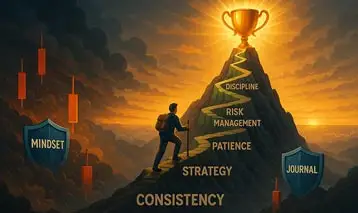
Many people enter the world of trading believing it is the fastest way to get rich.
The reality, however, is that success in financial markets is not a race of speed, but a gradual, skill-based process.
This article shows you how to reach real consistency and profitability in the shortest possible time not through dangerous shortcuts, but by building solid foundations for a professional trading journey.
(And Why It Has Nothing to Do With Getting Rich Quickly)
Many traders define success as “making a lot of money in a short time,” but the real definition is very different:
A trader with a small account who ends the year with modest but consistent profits is far more successful than someone with a large account who trades emotionally and finishes the year in loss.
True success is about consistency, not the size of profits.
Most traders enter the market expecting quick profits, which often leads them to:
This path may produce a few quick wins, but it almost always ends in significant losses.
In contrast, the real fastest path looks like this:
This approach may feel slow at the beginning, but it saves you from emotional loss cycles and allows your account to grow steadily and correctly over time.
One of the clearest signs of a mature trader is someone who:
Over-controlling trades leads only to stress and unstructured decisions.
If your analysis and strategy are solid, trust them and let the trade follow the plan.
Sometimes, the best action is no action at all.
The belief that “trading less means progressing less” is a serious misconception. In reality:
A trader’s biggest enemy is not the market it is fear, greed, impatience, and revenge trading.
Learning to control these emotions is what truly accelerates the journey toward success.
If you want to shorten the path, there are no shortcuts but there is a correct approach:
When these four pillars are in place, even a small trading account can grow steadily.
And that is real “fast success” achieved not through excitement, but through skill, structure, and control.


