

Forex
+100 Assets
Content table
1hours ago
7 Minutes read
Written by Greenup24
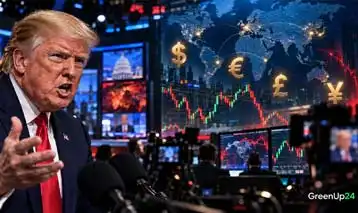
The foreign exchange market responds to far more than inflation, employment and interest rate data. Elections, sanctions, wars, trade disputes, fiscal decisions, political statements and even unverified headlines can change market expectations within seconds.
According to the latest Triennial Central Bank Survey from the Bank for International Settlements, average daily global foreign exchange turnover reached approximately $9.6 trillion in April 2025. This enormous trading volume makes forex highly liquid, but high liquidity does not eliminate volatility, price gaps or slippage. During major news events, available liquidity can temporarily decline as quotes and orders adjust rapidly.
By 2026, the relationship between politics and currencies has become increasingly complex. Trade fragmentation, sanctions, supply chain realignment, energy security, artificial intelligence and the rapid circulation of information through social media now influence how currencies are priced.
For modern traders, following the news is not enough. What matters is understanding what the market expected, how the actual development differed from those expectations and whether the event changes the outlook for growth, inflation, interest rates or capital flows.
A currency’s value reflects the market’s assessment of the economic and political conditions surrounding its issuing country. When a political development changes expectations for economic growth, inflation, trade or monetary policy, demand for that currency may also change.
Market reactions generally operate through several channels:
A political story becomes particularly important to forex when it can alter one or more of these fundamental variables. Not every political headline has a lasting effect. Many produce only temporary volatility before the market returns its attention to economic fundamentals.
Markets often begin pricing election scenarios well before voting takes place. Traders assess candidates’ positions on taxation, government spending, tariffs, regulation, foreign trade and central-bank independence.
A currency does not necessarily rise or fall simply because a particular party wins. The market evaluates what the result could mean for fiscal deficits, public debt, inflation, investment and future monetary policy.
An important political result may create little movement if it was widely expected. A surprise outcome, however, can produce price gaps, wider spreads and rapid exchange rate adjustments.
Wars, military operations, diplomatic disputes and threats to international trade routes usually increase risk aversion. However, the effect on individual currencies depends on the location of the conflict, the countries involved and the consequences for energy and global trade.
If geopolitical tension raises oil prices, the currencies of energy-importing economies may come under pressure. Some energy exporters may benefit from stronger terms of trade, although direct involvement in a conflict can increase political risk and offset that advantage.
Sanctions can restrict access to international finance, foreign reserves, exports, imports and overseas investment. These pressures may reduce capital inflows and weaken the affected country’s currency.
The impact is rarely limited to the targeted economy. Banks, shipping companies, energy exporters and trading partners may also be affected. The market therefore prices a broader network of economic consequences.
Trade policy remains an important market variable in 2026. Tariffs can raise import costs, alter supply chains and add to inflationary pressure.
The currency reaction is not always straightforward. An import tariff may initially support a country’s currency, but the longer term result can change if it increases inflation, reduces growth or triggers retaliation from trading partners.
The International Monetary Fund has highlighted how geopolitical tensions, geoeconomic fragmentation and changing trade policies are reshaping trade, capital mobility and currency stability.
Tax cuts, stimulus programmes and increased public spending may improve short term growth expectations. However, if investors become concerned about fiscal deficits and public debt, government bond yields, inflation expectations and sovereign risk may rise.
Higher bond yields are therefore not automatically positive for a currency. If yields rise because of stronger growth and expectations of tighter monetary policy, they may support the currency. If they rise because investors are questioning the government’s fiscal credibility, the currency may weaken.
Political pressure on a central bank can change market expectations. If investors believe monetary decisions are being influenced by political objectives rather than price stability, they may demand a higher risk premium to hold assets denominated in that currency.
Markets typically monitor:
Large demonstrations, strikes, constitutional disputes, government resignations and snap elections can increase political risk. The impact is often stronger in emerging markets, where capital flows may be more sensitive and foreign exchange liquidity more limited.
The media does more than distribute information. Through headline selection, tone, speed and framing, it can influence how investors interpret a political event.
One of the most common mistakes is treating news and analysis as the same thing. News should describe a verifiable development, while analysis reflects an interpretation of its likely consequences.
Headlines such as “currency faces collapse” or “market prepares for a surge” are generally interpretations rather than established facts. Traders should identify the original event first and then evaluate the credibility of the analysis surrounding it.
Political information can now spread within seconds across news agencies, social networks, messaging platforms and trading terminals. Automated news systems and trading algorithms may also react to specific words, figures and phrases.
The first price move is therefore not always the result of a complete assessment. It may reflect algorithmic orders, stop execution, position unwinding or a temporary rush to buy or sell.
Two publications can describe the same development in very different ways. A government spending package, for example, may be presented as support for economic growth or as a threat to fiscal sustainability.
Markets tend to focus eventually on the economic consequences, but in the first few minutes, wording and framing can influence the direction and intensity of price movements.
Social platforms have made information more accessible while making verification more difficult. Old images, incomplete translations, fake accounts and comments taken out of context can spread rapidly.
In 2026, AI generated text, manipulated images, synthetic video and automated reposting have increased the risk of misinformation. A widely shared post should never be treated as reliable simply because it has attracted significant attention.
Artificial intelligence has become part of the process through which financial news is produced, summarised and analysed. Financial institutions use language models and sentiment tools to process speeches, reports and social media discussions. European Central Bank research has also explored the use of language models and financial news to develop forward-looking measures of financial risk.
These technologies can accelerate analysis, but they remain vulnerable to error. An AI system may:
AI should therefore support market analysis rather than serve as the sole basis for a trading decision.
Markets trade expectations about the future, not only confirmed facts. A credible looking rumour can therefore influence prices before an official announcement is published.
Rumour-driven moves often follow four stages:
If the rumour is confirmed, the market will assess how much of its impact has already been priced in. If it is denied, positions based on the original claim may be closed rapidly, producing a powerful reversal.
A central principle of news analysis is that markets do not react only to the event itself. They react to the difference between the event and prior expectations.
A seemingly positive development can still cause a currency to fall when:
This behaviour is sometimes described as “buy the rumour, sell the news,” but it should not be treated as a universal market rule.
In the days or weeks before an event, polling, public statements and likely scenarios begin to influence prices. If the market has a strong consensus, much of the expected effect may occur before the official result.
During the first seconds, automated systems respond to words, numbers and headlines. This phase can involve rapid movement, wider spreads and reduced market depth.
Once the full statement or report becomes available, professional market participants evaluate its details. The initial move may continue, lose momentum or reverse completely.
Over the following hours and days, attention shifts from the headline to the implications for growth, inflation, interest rates, government finances and trade.
If the event changes the economic outlook, a medium term trend may develop. If it does not, the initial volatility may fade and the exchange rate may return towards its previous range.
If a political development raises the probability of stronger inflation or tighter monetary policy, bond yields and the currency may rise.
However, if higher inflation is accompanied by a significant slowdown in growth, the result can be more complicated.
Political stability, predictable regulation and stronger growth prospects can attract foreign investment. Instability, sanctions and concerns over asset ownership may accelerate capital outflows.
The currencies of countries that export oil, gas, metals or agricultural products are often sensitive to commodity prices. Political tension affecting energy routes can simultaneously influence oil, inflation expectations, bond yields and exchange rates.
Tariffs, export restrictions and supply chain disruptions can alter imports and exports. The final currency effect depends on the structure of the economy and the response of its trading partners.
Investors usually demand higher returns to hold assets exposed to elevated political risk. A rising risk premium can place pressure on bonds, encourage capital outflows and weaken the currency.
The US Dollar, Swiss Franc and Japanese Yen are commonly described as safe haven currencies, but their performance is neither guaranteed nor identical.
Their reaction depends on factors such as:
For example, global stress may support the US Dollar through increased demand for liquidity. However, if the crisis directly affects confidence in US fiscal or economic policy, the Dollar may behave differently. The Yen’s traditional defensive behaviour may also be less pronounced when yield differentials are exceptionally wide.
The United Kingdom’s 2016 referendum on leaving the European Union remains a clear example of how politics can create both immediate and long-term currency effects.
The unexpected outcome caused a sharp decline in Sterling, but the impact continued well beyond the initial market shock. Trade negotiations, regulatory changes, investment decisions, labour mobility and the UK’s relationship with Europe influenced the Pound for years.
Trade tensions between the United States and China demonstrated that tariffs do not affect only the currencies of the two countries involved. Economies linked to Chinese demand, commodity markets, global production networks and worldwide growth expectations were also affected.
By 2026, the issue extends beyond traditional tariffs. Technology restrictions, export controls, supply chain security and the relocation of manufacturing have all become part of currency analysis.
The Euro-area debt crisis demonstrated how a shared currency can be influenced by the political and financial conditions of multiple countries at once. Concerns about sovereign debt, banking stability and policy coordination increased volatility in the Euro.
European Central Bank measures played an important role in containing financial risks, but the crisis highlighted the tension between a shared monetary policy and the separate fiscal policies of member states.
Disruptions or threats to oil and gas transportation routes can have multiple market consequences. Higher energy prices may raise inflation in importing economies, reduce household purchasing power and complicate central bank decisions.
Traders analysing such developments should consider oil prices, bond yields, inflation expectations and the currencies of both energy importing and energy exporting countries.
Before making a decision based on a political story, traders should ask:
Sources can generally be classified into three levels:
For market sensitive information, the first two levels should normally be checked before relying on commentary from the third.
Elections, central bank meetings and budget announcements usually have known schedules. Traders can adjust their position sizes and risk exposure in advance.
Military action, emergency sanctions, government resignations or the sudden collapse of negotiations may occur without warning. During such events, capital protection becomes more important than predicting the initial direction.
As volatility rises, price movements become wider. Using the same position size as in normal conditions can produce a much larger monetary loss. Reducing trade size is one of the most direct methods of controlling event risk.
High leverage does not carry the same risk in a calm market and during a major political event. When liquidity declines, even a relatively small price movement can have a significant effect on equity and margin levels.
The difference between Bid and Ask prices can widen during important news events. A stop loss order is also not a guaranteed exit price. Once triggered, the order is executed at the first available tradable price. If the market moves through the selected level or sufficient liquidity is unavailable, the execution may involve slippage.
Entering immediately after a large candle can place the trader near the end of the first reaction. It is often preferable to confirm that the information is authentic, the details have been processed and related markets support the move.
Instead of relying on a single prediction, traders can prepare for:
Each scenario should include an invalidation point, position size and maximum acceptable loss.
A currency should not always be analysed in isolation. The following markets can help confirm or challenge the initial interpretation:
Some events require several minutes or hours before their true implications become clear. A wait and see approach can reduce exposure to the period when spreads, slippage and conflicting signals are most severe.
Hedging does not eliminate every risk. Opening an offsetting position may reduce directional exposure, but it can increase spread, swap and commission costs while making the overall position harder to manage.
Before using a hedge, a trader should know:
Without a defined exit plan, hedging can lock capital into opposing positions without solving the underlying risk management problem.
Before entering a news-based trade, identify:
If these questions cannot be answered clearly, choosing not to trade may be the more professional decision.
Governments are increasingly incorporating economic security, technology and energy policy into international trade decisions. This can redirect capital and trade flows while increasing the sensitivity of currencies to political relationships.
The relocation of production can influence foreign direct investment, exports, employment and currency demand over the long term. Forex analysis must therefore consider structural changes in trade as well as monthly economic indicators.
Investment in renewable energy, carbon related policies and restrictions on fossil fuels can affect the currencies of both energy producers and consumers. The pace of implementation and an economy’s ability to adjust will help determine the outcome.
Central bank digital currencies and new cross border payment systems may alter the speed and cost of capital transfers. This does not mean traditional currencies or the forex market will disappear. IMF research has also examined how changes in payment infrastructure and geoeconomic frictions can influence capital flows and exchange rate volatility.
As AI generated content becomes more convincing, distinguishing authentic reports from fabricated material becomes more difficult. Traders should be especially cautious when images, videos or quotations appear through only one unofficial source.
Political events and media coverage can influence forex through interest rate expectations, capital flows, energy prices, international trade and changes in risk premiums. However, the direction of a currency cannot be determined solely by whether a headline appears positive or negative.
Understanding previous market expectations, checking the original source, analysing the economic implications and controlling risk are more important than reacting quickly to a headline. In the 2026 information environment, a trader’s advantage is not simply receiving news first. It is the ability to distinguish reliable information, assess what has already been priced in and manage exposure when volatility rises.
For more educational content on financial markets, trading concepts and risk management, traders can visit GreenUp24.com.
This material is provided for educational purposes only and should not be considered a direct recommendation to buy or sell any financial instrument.


