

Forex
+100 Assets
Content table
4 mounts ago
3 Minutes read
Written by Greenup24

Recent price action in the USD/JPY pair has raised fresh questions about the effectiveness of Japan’s currency intervention strategy. While there are signs that Tokyo has stepped into the market, the impact appears limited compared to previous episodes, leaving traders uncertain about what comes next.
USD/JPY recently dropped sharply from near 157.00 to around 155.50, only to rebound quickly back toward the 156.60 level. This fast recovery suggests that any intervention, if confirmed, lacked the strength needed to shift market momentum.
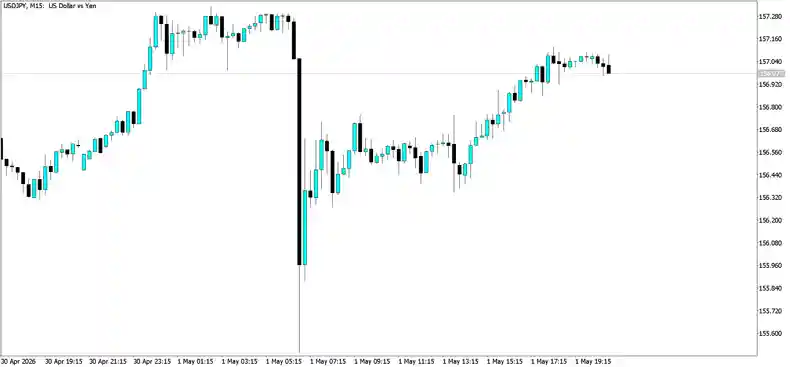
Reports indicate that Japan’s Ministry of Finance has coordinated with the central bank to step in. However, the approach so far appears cautious, possibly aimed at signaling rather than aggressively defending the yen.
Under these conditions, even direct intervention may only produce temporary relief.
Japan holds over $1.2 trillion in foreign reserves, making it one of the largest players in the FX market. However, a significant portion of these reserves is tied up in securities, especially U.S. Treasuries, rather than liquid cash.
Selling those assets to fund intervention could create unintended consequences:
Currency intervention is not just about size—it’s about signaling. In the past, Japan successfully shifted market sentiment with large, decisive actions. But repeated small-scale interventions risk losing credibility.
If traders begin to perceive Tokyo’s actions as weak, they may continue to push against the yen, amplifying downward pressure.
A joint intervention with the United States would likely be far more effective than Japan acting alone. However, this scenario faces political hurdles:
For now, Japan appears to be navigating this challenge on its own. The success of future interventions will depend on execution:
However, as long as fundamental forces remain aligned against the yen, any gains from intervention are likely to be short-lived.
In the current environment, market expectations matter just as much as actual policy moves—if not more.


