

Forex
+100 Assets
Content table
5 mounts ago
3 Minutes read
Written by Greenup24
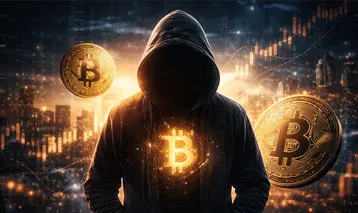
In the fast moving world of cryptocurrencies, few mysteries have captured as much long term attention as the identity of Satoshi Nakamoto. From time to time, new investigations such as those by The New York Times bring the topic back into the spotlight, fueling speculation about who really created Bitcoin.
But beyond the headlines and curiosity, a more practical question emerges for traders and investors: does knowing Satoshi’s identity actually matter for the market?
Bitcoin was born in 2008, at the height of the 2008 Financial Crisis, when trust in traditional financial institutions was severely shaken. In that environment, the idea of a decentralized currency operating outside government and banking control wasn’t just innovative, it was revolutionary.
This origin story highlights an important point: Bitcoin was never about a person. It was built on an idea, one that continues to define its value in global markets today.
While the identity of Satoshi Nakamoto remains unknown, blockchain data tells a clear story about early activity. Satoshi is believed to hold approximately 1.1 million BTC, making them the largest holder of Bitcoin.
What makes this even more remarkable is that these coins have remained untouched since around 2010. For many market participants, this effectively removes a significant portion of Bitcoin’s supply from circulation, almost as if it no longer exists.
A widely accepted theory in the crypto space is the so called “dead coins” thesis. According to this view, Satoshi’s holdings are permanently inaccessible whether due to lost private keys, intentional abandonment, or other unknown reasons.
This belief plays a crucial role in reinforcing Bitcoin’s scarcity narrative. If a meaningful share of total supply is assumed to be off the market indefinitely, it naturally supports long-term price stability and upward potential.
The real concern for traders isn’t who Satoshi is, it’s what happens if those coins move.
Even a single transaction from a wallet linked to Satoshi could trigger widespread Fear, Uncertainty, and Doubt (FUD). Markets might interpret it as a signal of a potential large-scale sell off or even Satoshi’s return. The likely outcome would be increased volatility, sharp price declines, and a ripple effect across the broader crypto market.
In this context, behavior matters far more than identity.
One of Bitcoin’s greatest strengths is its lack of central authority. The long absence of Satoshi Nakamoto has allowed the network to evolve in a truly decentralized way.
If Satoshi were to reappear, their influence could extend beyond markets into development decisions. Their voice might carry disproportionate weight within the community, potentially disrupting the balance that defines Bitcoin’s decentralized governance.
Prominent figures in the crypto industry have also emphasized the value of Satoshi’s anonymity. Changpeng Zhao, founder of Binance, has described it as a positive aspect of Bitcoin’s design.
Similarly, Vitalik Buterin, creator of Ethereum, once noted that Satoshi’s disappearance was one of the best things that could have happened to Bitcoin.
For traders and investors, Satoshi’s true identity is ultimately a side story. What truly drives the market are fundamentals: supply and demand, adoption, liquidity, and sentiment.
Satoshi Nakamoto may remain one of the greatest enigmas in financial history, but Bitcoin’s strength lies in the fact that it doesn’t depend on knowing the answer.


