

Forex
+100 Assets
Content table
3 mounts ago
5 Minutes read
Written by Greenup24

Crude oil ended the trading week on June 26, 2026, with one of its weakest performances in recent months. Futures settled at $69.23 per barrel, down 3.74% on the day and nearly 8.5% for the week.
The decline followed two consecutive weeks of heavy losses, with prices previously falling 10.4% and 6.6%, highlighting sustained selling pressure across the energy market.
Since reaching a high of $119.48 per barrel, crude oil has declined by approximately 42.6%, marking a significant reversal in market sentiment and a sharp correction in energy prices.
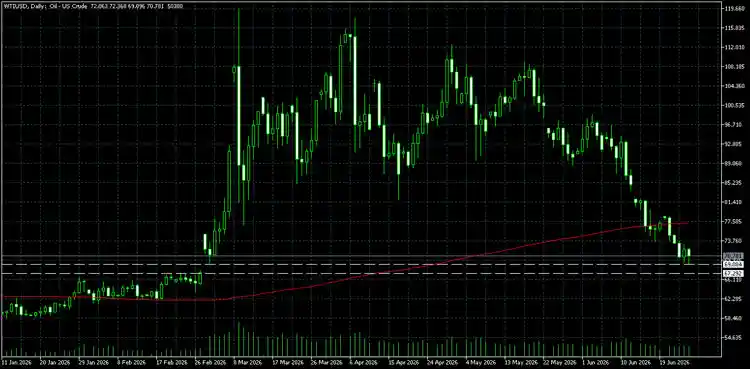
During the final trading session of the week, prices dropped to $68.56, bringing the market close to the February 27 closing level of $67.28—the last settlement before the Iran–U.S.–Israel conflict began.
This price area has become a key technical support level. A decisive break below it could pave the way for a deeper correction.
From a technical standpoint, crude oil remains below its 200-day moving average, which stood near $73.80.
Trading below this long-term indicator generally signals that sellers continue to dominate the market. Unless prices reclaim this level, the broader technical outlook is likely to remain bearish.
Despite the sharp decline in crude oil, gasoline prices have not fallen proportionally. Before the regional conflict, the U.S. average gasoline price was approximately $2.98 per gallon. Even after crude oil's substantial decline, the national average remained around $3.90 per gallon.
This gap suggests that lower crude prices typically take time to pass through to consumers, as refining costs, transportation expenses, taxes, and supply chain factors continue to influence retail fuel prices.
Crude oil's three-week losing streak, combined with its move below the 200-day moving average, indicates that bearish momentum remains dominant. The $67.28 level is now the market's most important support. A break below that level could accelerate downside pressure, while a recovery above $73.80 would be the first meaningful signal that sellers are beginning to lose control.


